
Fitbit Air Review (2026): The Best Screenless Fitness Tracker Yet?

“One of the most interesting wearable launches in years — not because it does more, but because it intentionally does less. Yes, it’s a Google product (and we address the trust concerns below), but the Fitbit Air succeeds because it reduces friction instead of adding features.”
- No mandatory subscription required
- Sleep tracking & passive health monitoring
- Digital minimalists & analog watch wearers
- Long battery life without daily charging
- You need onboard GPS or advanced analytics
- You rely on on-screen workout metrics
- You want smartwatch functionality
- You’re a serious endurance athlete
The Case Against More Screens
I’ve reviewed wearable tech long enough to become skeptical whenever a company claims a product is “revolutionary.” Usually, that translates into another app, another screen, another subscription, and another device demanding your attention.
For the last decade, the wearable industry has been obsessed with escalation: bigger displays, brighter OLED panels, more sensors, more notifications, more AI.
Then Google released the Fitbit Air — a screenless fitness tracker with no notifications, no apps, no touchscreen, and no visible metrics on your wrist. At first glance, it sounds absurd.

Most people don’t need more wearable technology. They need wearable technology that becomes easier to live with long term. That distinction matters.
But after spending time analyzing the device against the Apple Watch Ultra, Whoop 4.0, and Oura Ring Gen 3, I think Google may have identified something the rest of the industry missed.
What Is the Fitbit Air, Really?
Let’s remove the marketing language. The Fitbit Air is not a smartwatch. It’s not even really a fitness watch. It’s closer to a passive biometric recorder designed for continuous health monitoring.
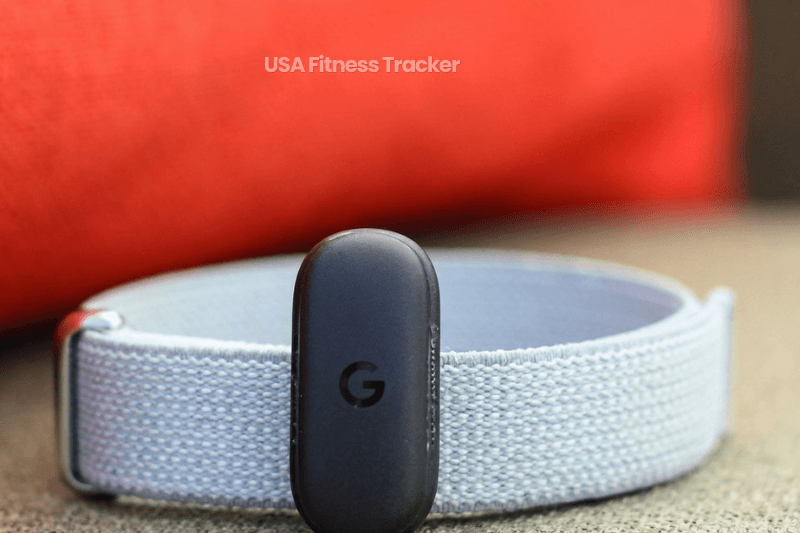
Google internally calls the core tracking module the “Pebble” — a tiny sensor capsule weighing just 5.2 grams. With the standard strap attached, the entire device weighs roughly 12 grams.
There’s no display, no buttons, no app launcher, no message notifications, no buzzing on your wrist. Just a tiny LED indicator and a collection of sensors. And strangely enough, that simplicity is exactly what makes the product compelling.
Hardware & Comfort: The Biggest Strength of the Fitbit Air
Comfort is the entire foundation of this product. And honestly? This is where the Fitbit Air becomes genuinely impressive.
Among the dozens of wearables I’ve tested and researched over the years, very few devices consistently disappear during overnight wear. The Fitbit Air is one of them.
Compared to the Apple Watch Ultra, the difference is immediate. Sleeping with a large smartwatch can feel like wearing a tiny computer against your wrist. Even slimmer bands like the Whoop 4.0 still have noticeable bulk. The Fitbit Air feels dramatically lighter and narrower — several early reviewers described it as roughly half the width of a Whoop band.
That sounds like a minor detail until you wear something 24/7. After a few nights, the biggest thing you notice about the Fitbit Air is that you stop noticing it entirely.
Band Options
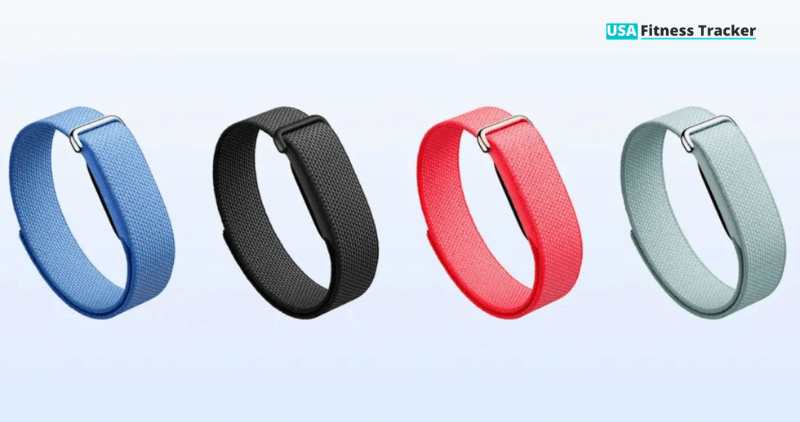
Unlike many fitness trackers that look aggressively “gym-focused,” Google understands that wearable aesthetics matter. Available bands include the Performance Loop, Active Band, Elevated Modern Band, and Stephen Curry Edition (with extra airflow design and water-resistant coating). The Pebble system lets you swap between fitness-oriented and fashion-oriented bands without changing the tracking hardware.
Fitbit Air Features: Surprisingly Complete for $99
For a device this small, the hardware package is surprisingly capable.
The inclusion of Afib alerts at this price point is especially notable. A few years ago, this type of heart monitoring was largely reserved for premium-tier wearables. From a pure hardware value perspective, Google is being surprisingly aggressive.
| Specification | Details | Assessment |
|---|---|---|
| Weight (Pebble) | 5.2g (12g with strap) | Excellent |
| Display | None (LED indicator only) | By Design |
| Battery Life | Up to 7 days | Excellent |
| Fast Charging | 5 min = 1 day use | Excellent |
| Water Resistance | 50 meters | Very Good |
| GPS | Phone-connected only | Weakness |
| Charger | Proprietary magnetic | Frustrating |
| Subscription | Optional ($9.99/mo) | Fair |
| Price | $99 | Competitive |
Battery Life: Finally, a Wearable That Doesn’t Feel High Maintenance
Battery life is one of the most underrated parts of the user experience. The Fitbit Air claims up to 7 days of battery life with 5 minutes of charging yielding a full day of use — and early impressions suggest those claims are fairly realistic.
That changes the psychology of wearable ownership. Instead of constantly monitoring battery percentages, the Fitbit Air fades into the background. You stop thinking about charging schedules. You stop planning around power levels.
The Google Health App Is Quietly More Important Than the Hardware
The biggest transformation may not be the device itself — it’s the software ecosystem. The old Fitbit app has evolved into the new Google Health platform, a broader AI-assisted wellness ecosystem with a cleaner interface far more focused on recovery, readiness, sleep quality, behavioral trends, and long-term patterns.
Instead of drowning users in dashboards and widgets, the app surfaces health insights in a more digestible timeline format. That design choice fits the entire philosophy of the Fitbit Air: less interaction, more passive awareness.
The Gemini AI Coach: Useful or Just Another Subscription?
Google’s Gemini-powered Health Coach is clearly the centerpiece of the long-term strategy. The AI layer attempts to contextualize your health data instead of simply reporting numbers — adapting recovery recommendations around injuries, adjusting workouts based on sleep quality, recognizing behavioral patterns over time.
Fitbit Air Accuracy: Good Enough for Most, Not Elite Athletes
Sleep Tracking
Sleep tracking appears to be one of the Fitbit Air’s strongest areas. Google claims a 15% improvement in sleep analysis accuracy using updated machine-learning models. More importantly, the comfort factor dramatically improves compliance — and the “best” sleep tracker is ultimately the one you consistently wear.
Step Counting Caveats
Community discussions already mention occasional “phantom steps” during hand movement or animated conversations. This is not unique to Fitbit — nearly every wrist-based tracker struggles with motion interpretation — but the Fitbit Air sometimes appears overly sensitive. If you talk with your hands a lot, don’t expect laboratory precision.
Automatic Workout Detection Still Needs Work
This is probably the device’s biggest weakness. The Fitbit Air is supposed to detect workouts automatically without requiring manual input. For running, early reports are encouraging. For cycling, less so — several reviewers noted that rides were detected late or partially missed because the tracker relies heavily on wrist movement. Compared to the Whoop 4.0, Fitbit’s auto-detection library still feels limited. Serious athletes will notice that gap immediately.
Fitbit Air vs The Competition
| Attribute | Fitbit Air ✦ | Whoop 4.0 | Oura Ring | Apple Watch Ultra |
|---|---|---|---|---|
| Starting Price | $99 | Subscription | $299 | $799+ |
| Mandatory Sub | No | Yes | Optional | No |
| Battery Life | ~7 days | ~4–5 days | ~7 days | ~36–60 hrs |
| Display | None | None | None | OLED |
| Sleep Comfort | Excellent | Very Good | Excellent | Poor |
| Onboard GPS | No | No | No | Yes |
| Exercise Detection | Limited | Advanced | Basic | Advanced |
| Best For | Casual wellness | Serious athletes | Sleep focus | Power users |
| Afib Detection | ✓ | ✕ | ✕ | ✓ |
The biggest advantage for Fitbit is obvious: ownership. You buy the device once and keep core functionality forever. That alone makes the Fitbit Air extremely attractive to users frustrated by recurring subscription ecosystems.
Interestingly, the Fitbit Air isn’t really competing directly with the Apple Watch Ultra. The Apple Watch tries to become your digital command center. The Fitbit Air tries to disappear completely. Ironically, many users may end up wearing both — smartwatch during the day, Fitbit Air overnight. Google’s Companion Mode explicitly supports this behavior, which is probably one of the smartest positioning decisions they made.
The Google Trust Problem
There’s one issue that cannot be ignored: Google’s product history. Longtime Fitbit users remain understandably skeptical after years of discontinued features, abandoned apps, ecosystem changes, and “Google Graveyard” shutdowns.
Some Reddit users openly worry about long-term software support and whether Fitbit hardware could eventually become another abandoned experiment. That skepticism is reasonable. When you buy a health tracker, you’re investing in historical data, long-term trends, and ecosystem continuity. Google’s track record here is mixed, and it’s a real risk worth considering before committing.
Who Should Buy the Fitbit Air?
- You want a distraction-free wearable
- Sleep tracking matters more than smartwatch features
- You’re tired of daily charging rituals
- You wear analog watches and want something compatible
- You dislike subscription-heavy ecosystems
- You want passive health insights without screen overload
- You’re a serious endurance athlete
- You need onboard GPS for routes and pace
- You rely heavily on workout metrics during exercise
- You want smartwatch functionality
- You need highly advanced training analytics
Frequently Asked Questions
The Fitbit Air Understands a Problem Most Wearables Ignore
The Fitbit Air isn’t trying to win the smartwatch race. It’s trying to escape it. By removing the screen entirely, Google has highlighted something the industry rarely admits: more features do not automatically create a better wearable experience.
But at $99 with strong sleep tracking, week-long battery life, impressive comfort, and no mandatory subscription, the Fitbit Air may be the product that finally pushes screenless wearables into the mainstream. The ideal tracker is not the most powerful one — it’s the one you consistently keep wearing.
Sources & Research
To ensure accuracy in this review, we cross-referenced hardware specifications and software claims with independent research, clinical studies, and official documentation:
- 1. Google Health Official Documentation – Overview of the Gemini AI integration and continuous sensor tracking capabilities.
- 2. Journal of Clinical Sleep Medicine – Efficacy studies comparing wrist-based actigraphy to polysomnography in consumer wearables.
- 3. FDA Medical Device Clearances – Verification of the AFib detection algorithm clearance for the Fitbit Pebble module.

